Researchers of Codices Visiting Pannonhalma


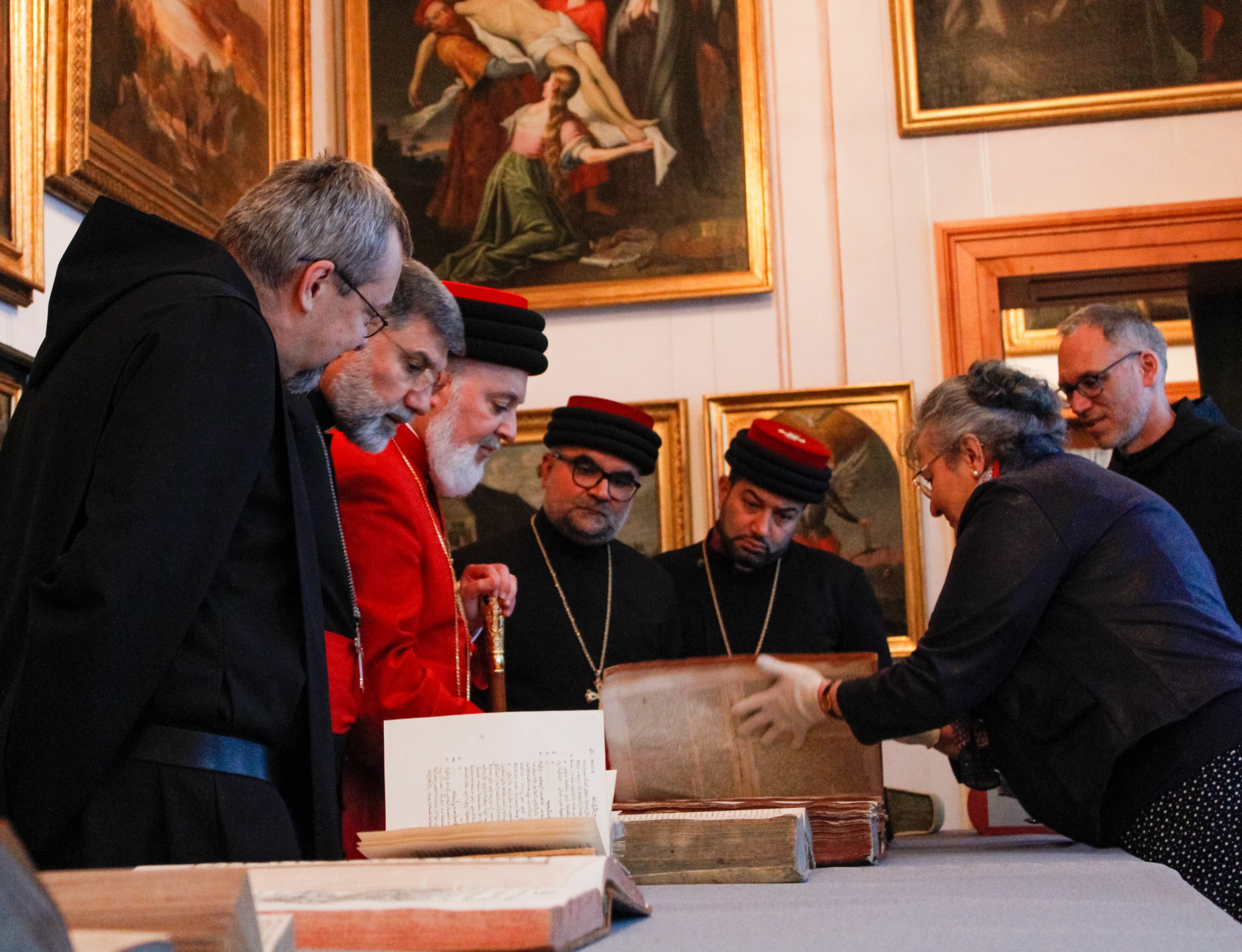
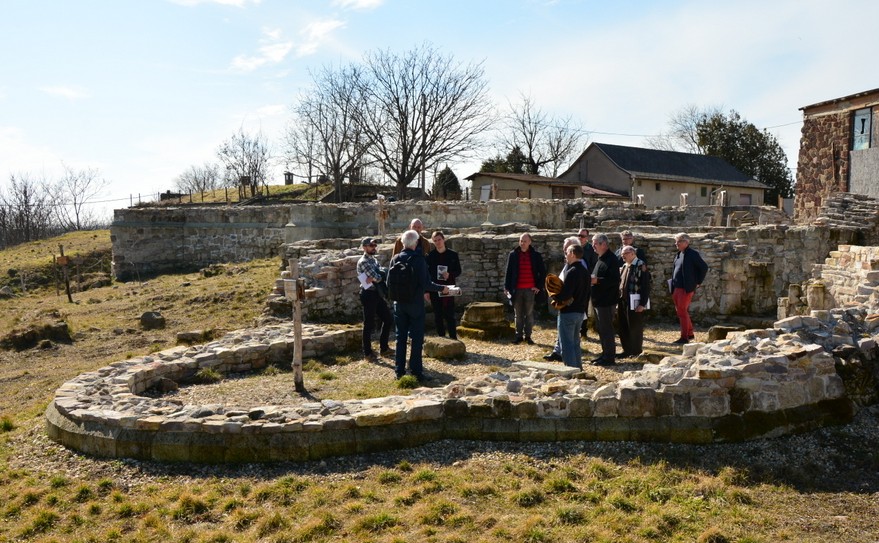
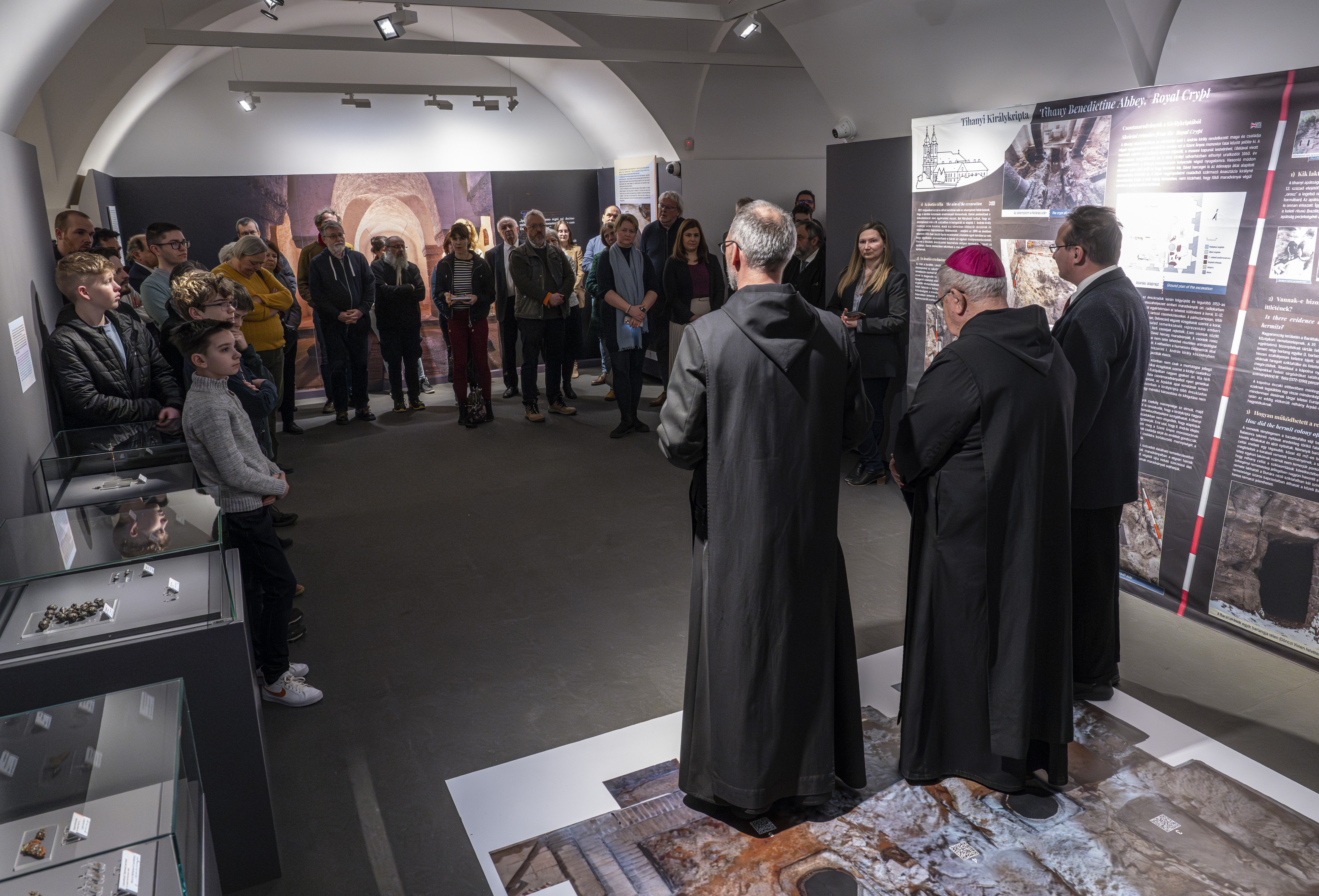
On 11 June, the members of the HUN-REN–NSZL Fragmenta et Codices Research Group visited Pannonhalma to see our periodic exhibition entitled Abbot Uros and His Work. Our colleagues from Budapest were also guided around in the Museum’s treasury and collection of minerals, which was opened in the near past.

You can read about the research group and their work here .

University Students from Kolozsvár/Cluj Visiting Pannonhalma


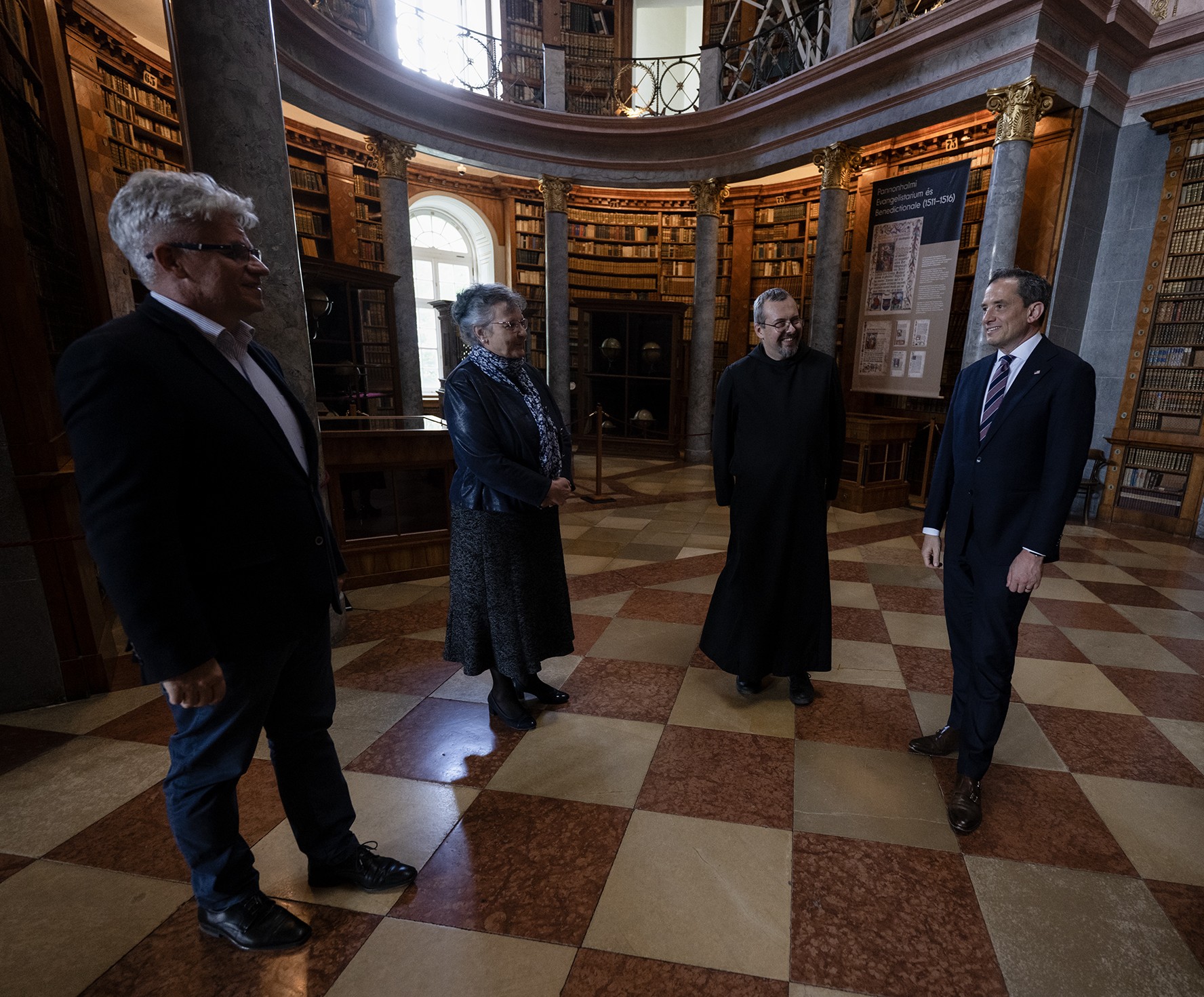
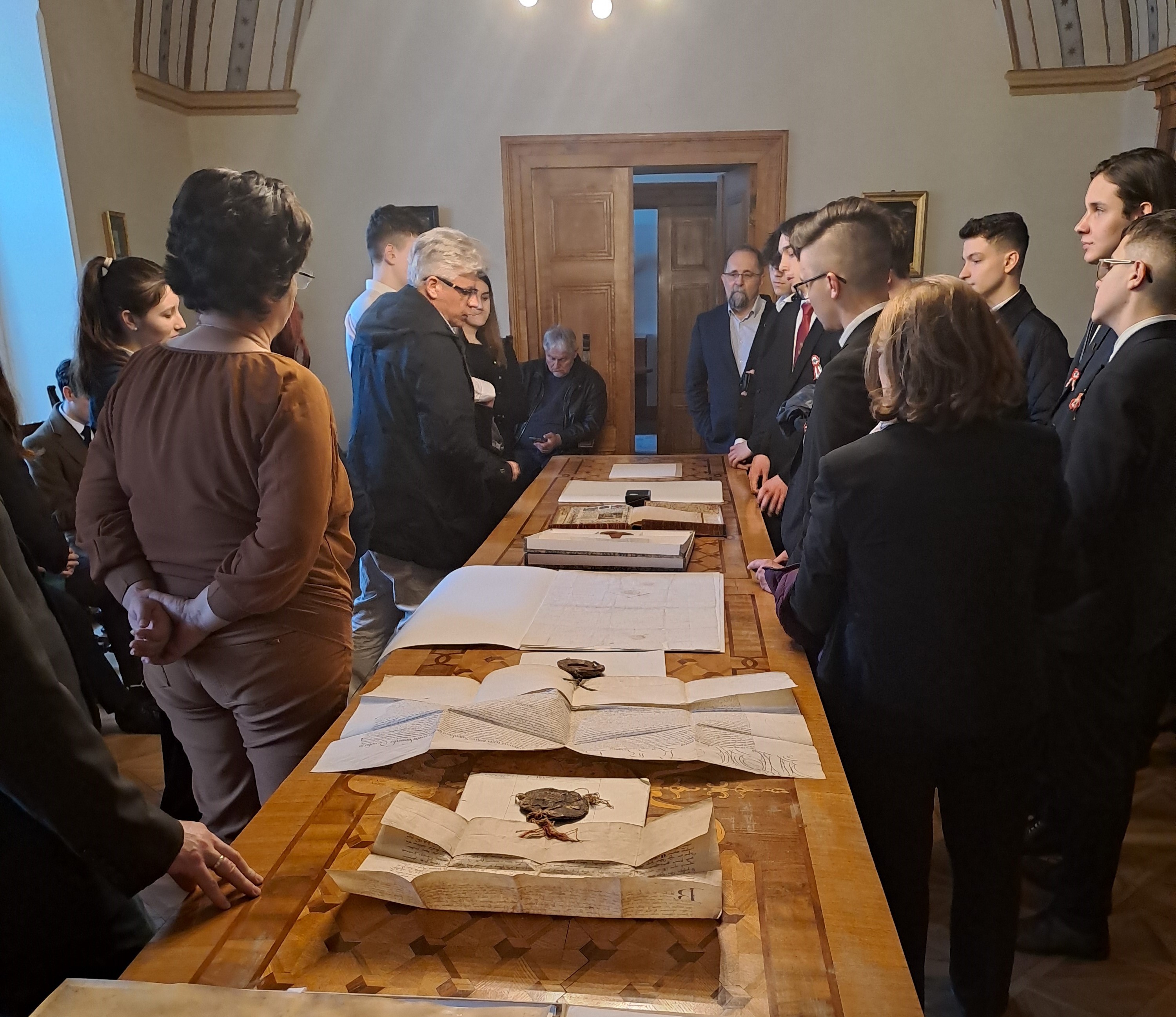
On 9 May, Hungarian and Romanian students of the Babeş-Bolyai University of Kolozsvár/Cluj majoring in history visited our Archives – not for the first time – led by Nagy Róbert-Miklós, senior assistant professor. As usual, they visited us between their archival programmes in Vienna and Budapest. Many teachers – among them Rüsz-Fogarasi Enikő, Vice Dean – joined the group. Our guests were guided around in the abbey and the periodic exhibition entitled Abbot Uros and His Work.

Documents from Siena in Pannonhalma


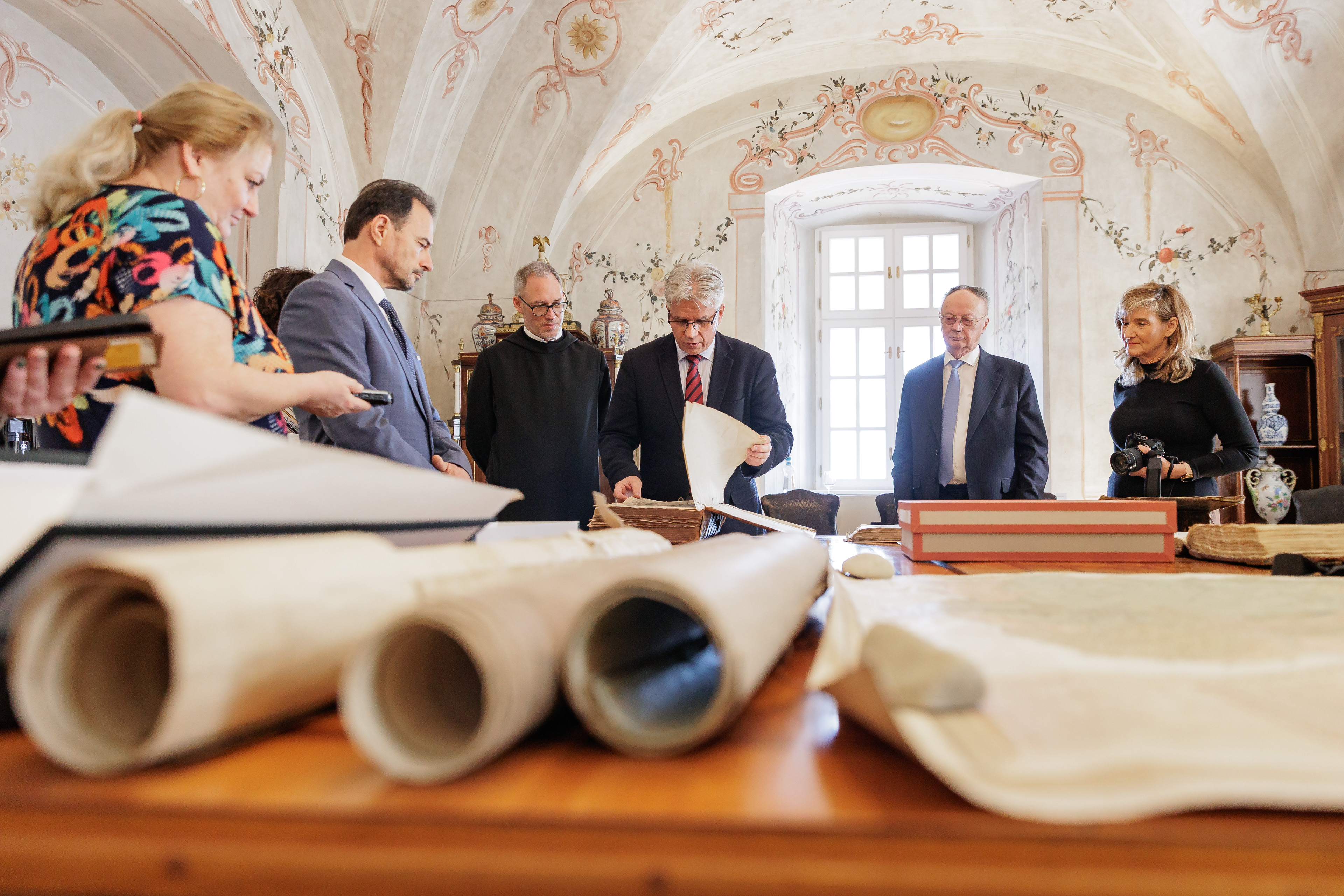
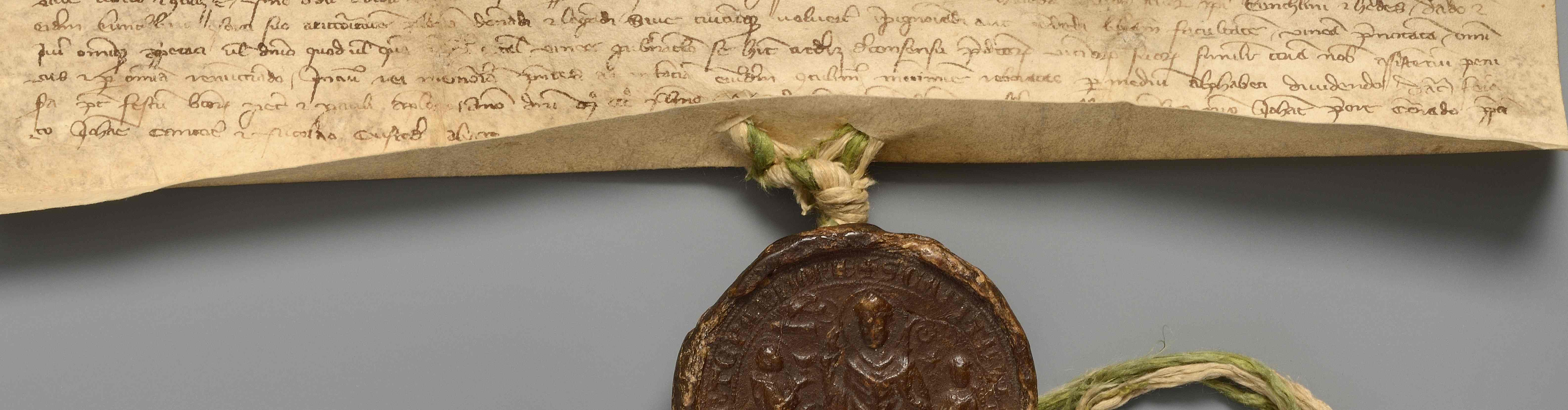
The periodic exhibition entitled Abbot Uros and His Work puts on show three documents, which are kept in the Siena State Archives. The documents were brought to Pannonhalma by Cinzia Cardinali, the Director of the Archives; she visited our Archives as well. The letters were written on 2 and 3 February 1242. They were sent to the pope in Rome; the first one by Abbot Uros and his monastic community from Pannonhalma, the second one by the same people and the Benedictine abbots in Hungary, the third one by the spiritual and temporal notabilities, who “survived the Tartars”.

Abbot Uros and His Work – exhibition-catalogue


The exhibition-catalogue entitled Abbot Uros and His Work – An Active Life in the Service of Saint Martin was published for the opening of the this-year periodic exhibition of Pannonhalma at the end of April. The catalogue was edited by the curators, Szovák Kornél and Takács Imre.

Many papers discuss the personality and activity of Uros in the catalogue, in addition to the detailed information about the written documents (whose majority is kept in our Archives together with Liber ruber) and material remains on show.

Bazilica800 – An Exhibition on Abbot Uros and His Work


On 27 April, the Archabbey of Pannonhalma opened its this-year periodic exhibition, which is the central element of the Bazilica800 anniversary-year. The curators of the exhibition entitled Abbot Uros and His Work were Szovák Kornél, historian and Takács Imre, art historian. The exhibition inaugurated by Maróth Miklós, academician could be visited in the Archabbey’s exhibitory area.

Sustainable Catholic Schools


The Eötvös József Research Centre (EJRC) of the Ludovika University of Public Service (LUPS), and the Saint Pope John-Paul II Research Centre of Pázmány Péter Catholic University (PPCU) held a conference entitled Sustainable Catholic Schools, The Question of Sustainability of Catholic Church Schools in the Past at Ludovika Campus on 17 April 2024.

Easter Guests in Our Archives


The monastic community in Pannonhalma has opened their gates in front of the faithful lay people for more than fifty years so that they could celebrate the Paschal Triduum together. The Eastre meeting primarily emphasises shared prayers and private composedness in the context of spiritual programmes. This year, among many other programmes, within the framework of a presentation in the archival-pedagogic room, our interested guests could get acquainted with Abbot Uros, the builder of the 800-year-old third church in Pannonhalma.

The Best Pupils of the History Competition Visited Our Archives


The finals of the 23rd Cultura Nostra History Competition of the Carpathian Basin was held in the Archabbey on 26 March. This year, the theme of the contest organised by the Rákóczi Association and the Pannonhalma Archabbey was the history of Hungary in the Arpadian Age. The reason for this was provided by the fact that the third monastic church in Pannonhalma celebrates the 800th anniversary of its consecration this year. Six hundred secondary school pupils of the Carpathian Basin took part in the programme.

A Rosette of 1848 in Our Archives


On the corner of a parliamentary publication of 1848, pressed in sealing-wax, a sample of the cocharda nationalis was preserved, as it was called then: national cockade (tarajka; “crestlet”).
The cockade of tricolour was spread all over Europe by the French revolution. At the outset, the trimmings of a hat made of cock-feathers (coq=cock) were called this way, later the pleated ribbon trimmings were also referred to this way.

The Conservation of Four Charters of the Arpadian Age


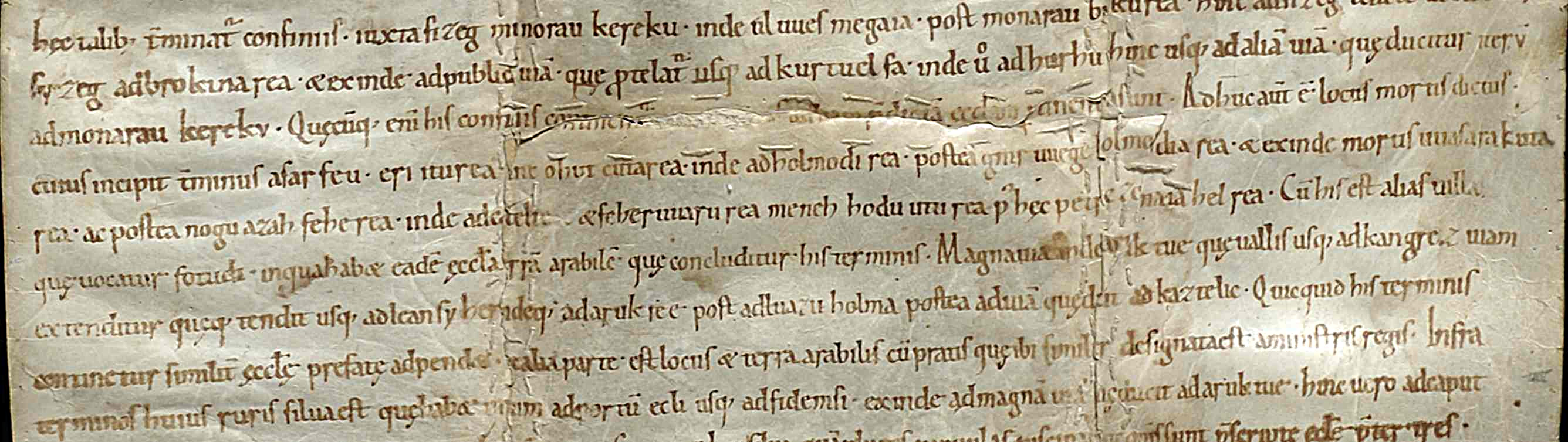
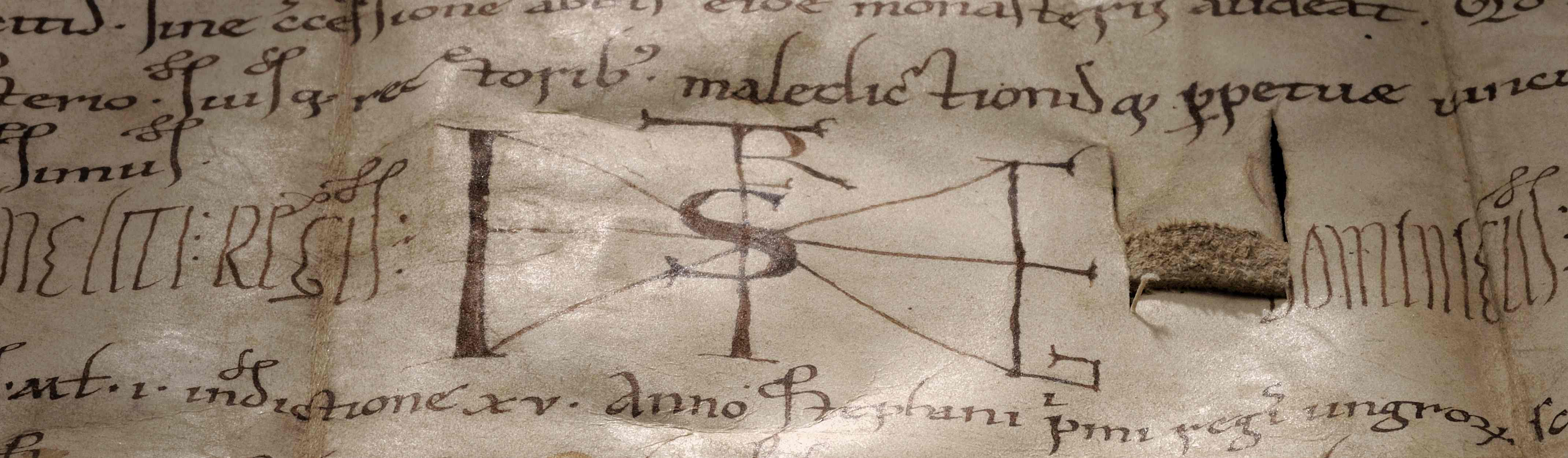
The 800-anniversary of the consecration of the third church of Pannonhalma is celebrated this year. In the jubilee year of the Basilica 800, an exhibition pays our respects to Abbot Uros, who had the church built. In the process of preparing the exhibition, four charters were conserved, which will be on show. In the first charter, Stephen – the Abbot of Monte Cassino – at the request of Abbot Uros visiting him transcribes Pope Innocent III’s letters-patent of 1208 for Saint Benedict’s monastery. (Capsa XXX K. – Nr.